Get on the list
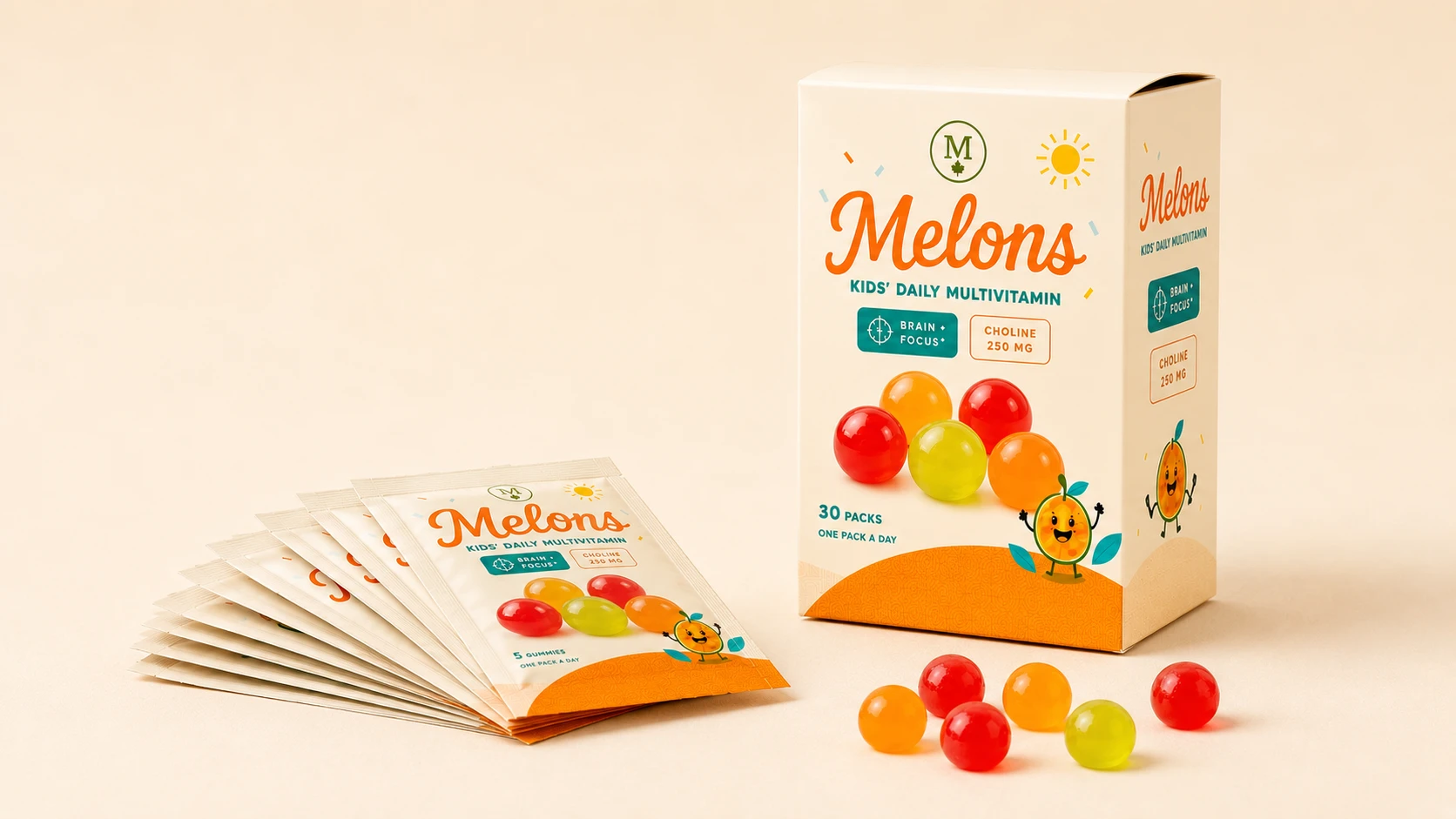
One pack. The whole panel.
$30/mo when we launch · free to join, no charge yet
We publish the full panel and the specific form of every nutrient, because the form is what determines whether the body can use it. Nothing here is for color or shelf appeal.
An essential nutrient the body uses to build cell membranes and the neurotransmitter acetylcholine, central to memory and attention. Most children fall short because the richest sources are egg yolks and organ meats. The Melons format exists largely to fit a real dose of it.
Vitamin B9 in its active form, already usable without the conversion step that synthetic folic acid requires. Supports DNA synthesis and the methylation reactions that run at high volume during growth.
Supports calcium absorption, bone development, and immune function. Endogenous production depends on sun exposure, which is why intake commonly falls short, particularly in winter and for kids who spend most days indoors.
The active form of B12, used directly in cellular metabolism. Works alongside folate in the same methylation pathway, which is why pairing the active forms of both is deliberate.
A chelated, gentle-on-the-stomach form of zinc, a mineral involved in immune response, growth, and taste. The bisglycinate form is well absorbed and less likely to cause the nausea associated with cheaper zinc salts.
A plant fiber that feeds beneficial gut bacteria. Most children eat well under the recommended fiber intake, and a daily prebiotic gives the probiotic something to work with.
A spore-forming, shelf-stable probiotic strain studied for digestive support. Spore formers survive stomach acid and ambient storage far better than the refrigerated strains common in other products.
Representative formulation, pending finalization. % Daily Value based on FDA reference values; a child's individual requirement varies by age. These statements have not been evaluated by the FDA. This product is not intended to diagnose, treat, cure, or prevent any disease. VitaCholine® and DE111® are registered trademarks of their respective owners.